Overview
End-to-end delivery of a newly mandated regulatory solution, enabling customers to reclaim funds from failed deposits through a secure self-service portal.
Expetise applied
User experience User | interface design | research | content design | email marketing product design & innovation | problem solving | stakeholder management
Requirement
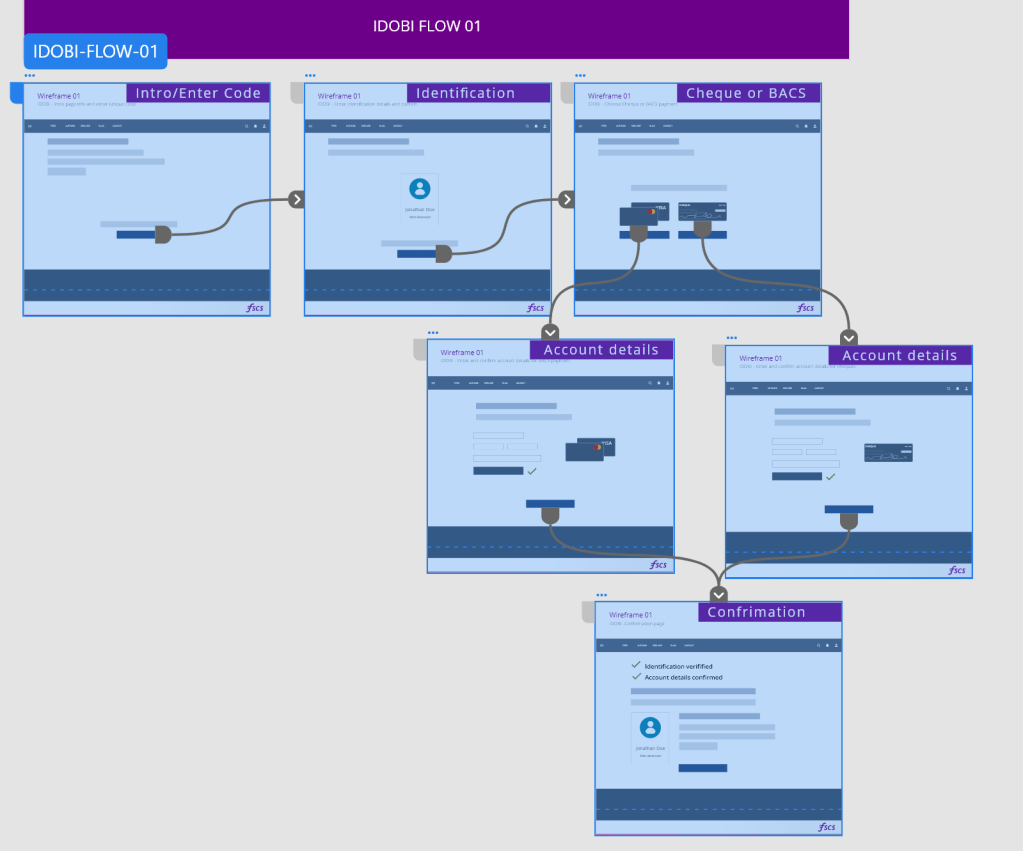
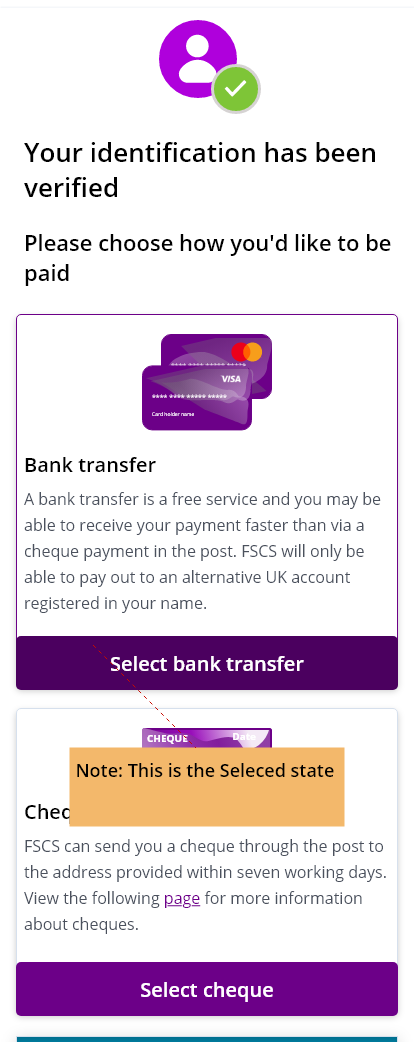
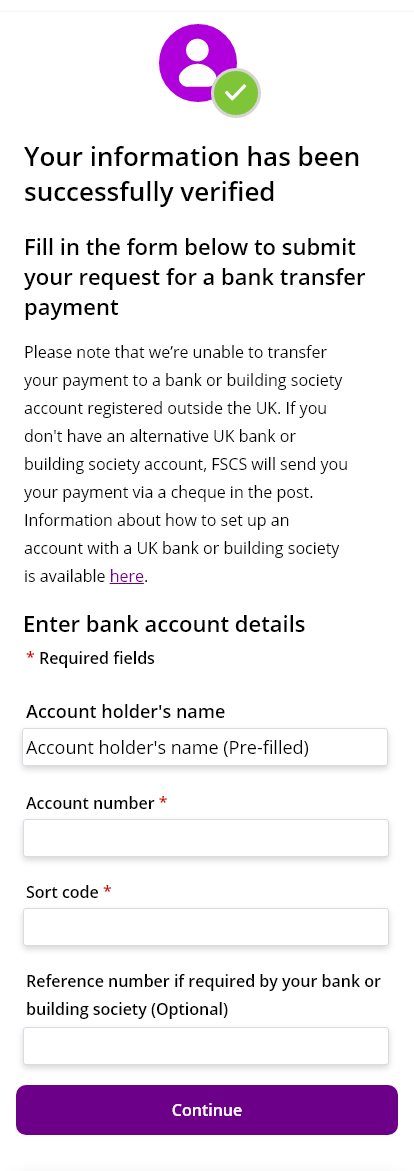
Develop an interim digital portal accessible to depositors with registered email addresses, with Faster Payments functionality as the preferred method for compensation delivery.
Background
Regulation requires FSCS to provide depositors with a secure, digital option to review compensation details and receive payments electronically.
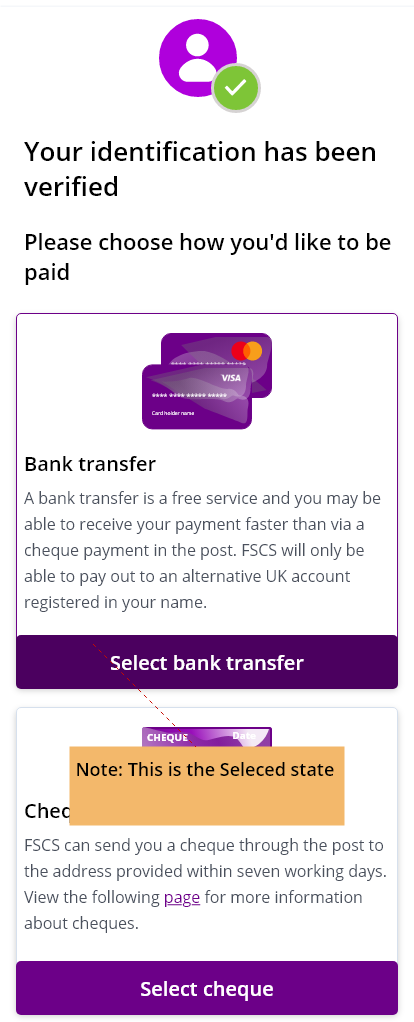
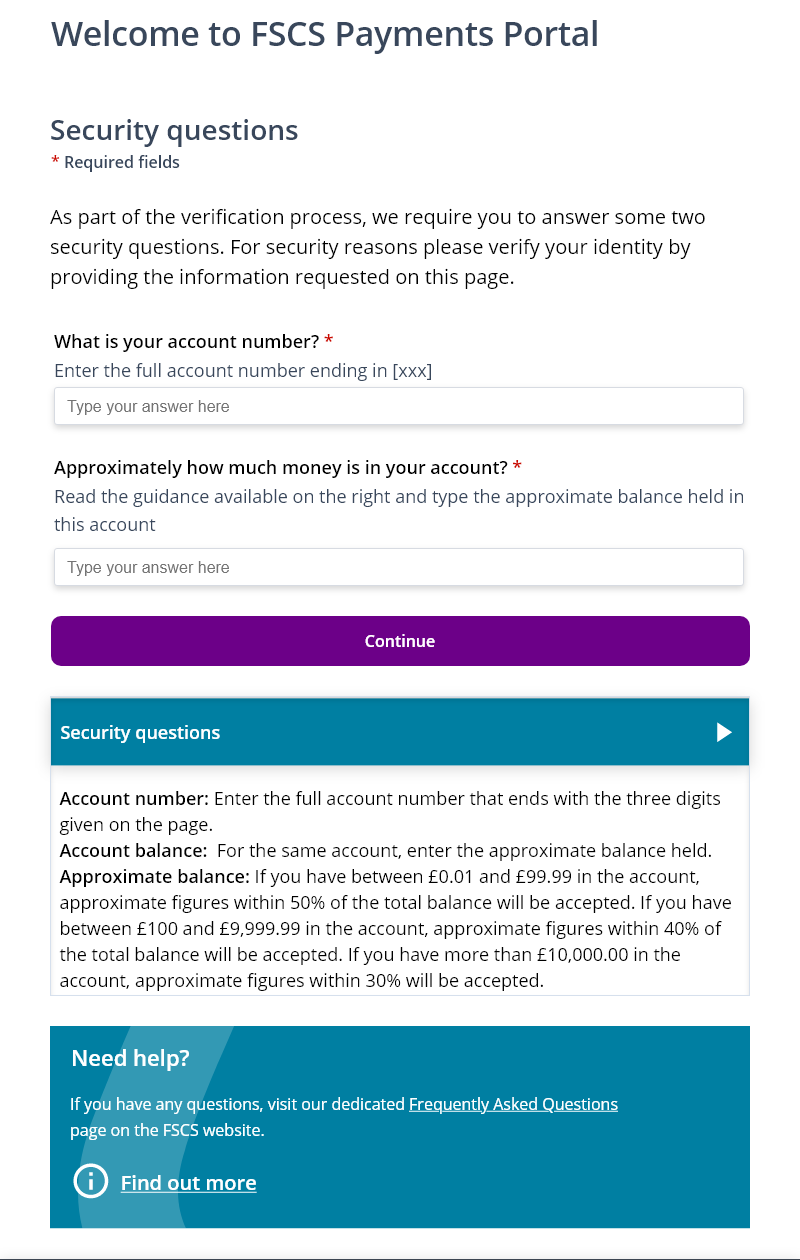
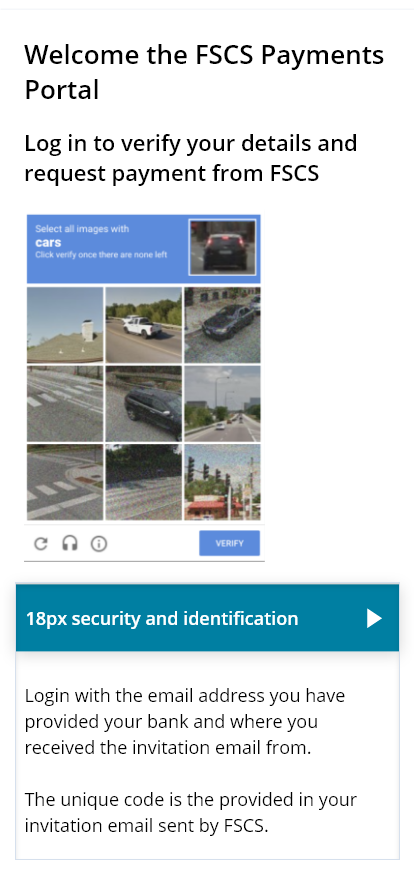
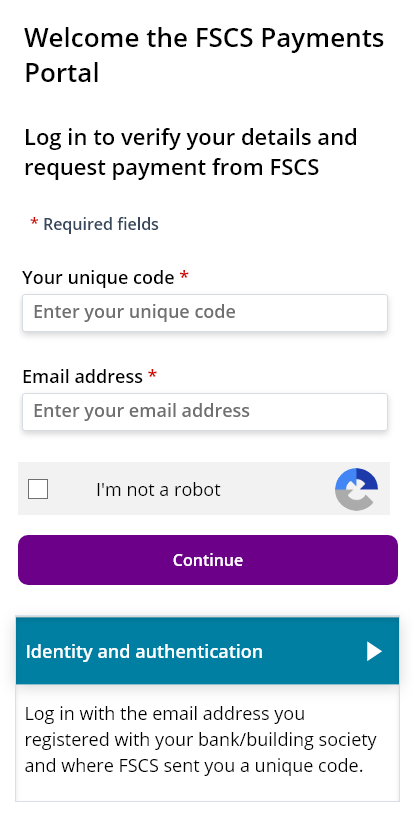
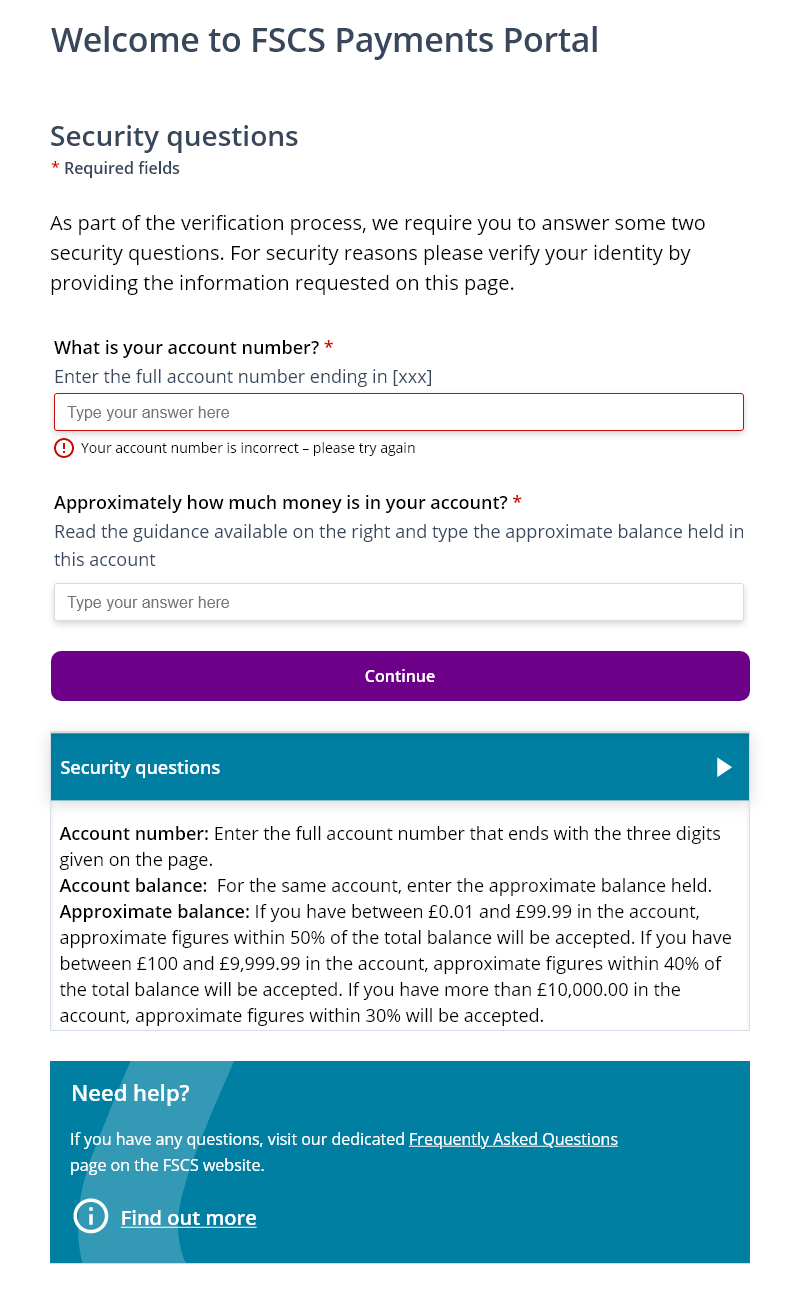
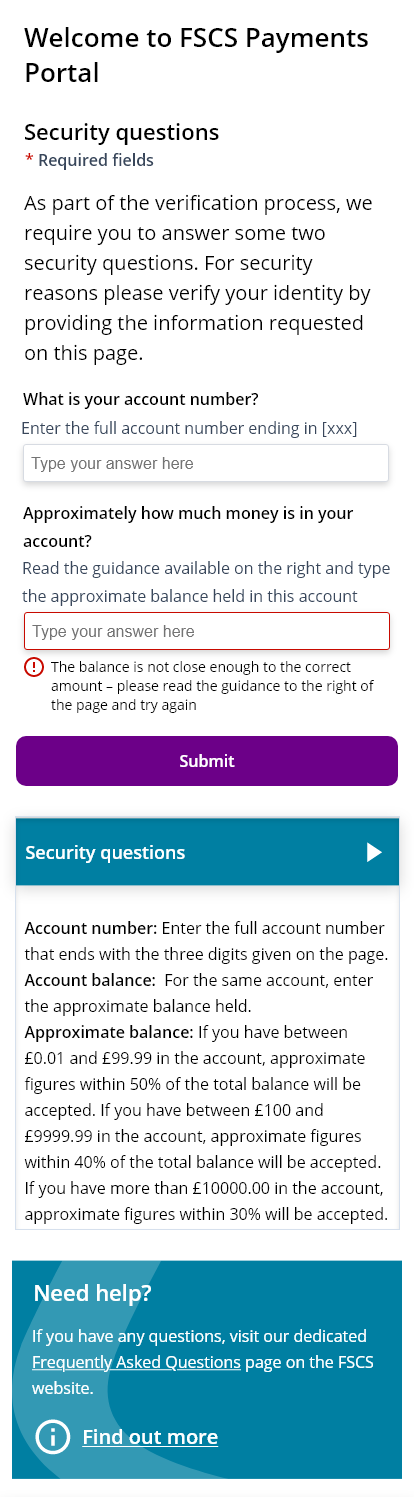
- Depositors with email addresses are invited to a secure FSCS portal to review their compensation and receive funds via Faster Payments.
- Depositors without email access continue to receive compensation via the existing postal cheque process.
- This ensures no depositor experiences a worse compensation journey than the current baseline.
Objective
For depositors with valid SCV email addresses, the interim solution aims to:
Delivering a new, regulator-mandated solution within tight timelines
Balancing security, trust, and usability for users unfamiliar with FSCS interactions
Designing a system capable of handling sensitive financial data securely
Adapting to evolving requirements and stakeholder inputs
Leveraging existing third-party capabilities while enhancing internal technical capacity
For those unable to access the portal:
compensation defaults to cheque distribution, ensuring equitable service.
Additionally, all depositors are supported with guidance on accessing services such as Current Account Switching and Basic Bank Account setup.
Challenges
Delivering a new, regulator-mandated solution within tight timelines
Balancing security, trust, and usability for users unfamiliar with FSCS interactions
Designing a system capable of handling sensitive financial data securely
Adapting to evolving requirements and stakeholder inputs
Leveraging existing third-party capabilities while enhancing internal technical capacity
To mitigate risk, the approach prioritised:
Use of off-the-shelf capabilities through FSCS technical partners
Incremental enhancement of in-house systems
Minimising delivery complexity while ensuring operational reliability
Delivery Approach
Phased rollout:
- Core functionality was delivered iteratively across multiple phases
- This allowed improvements to be released rapidly while reducing delivery and operational risk
Interim solution focus:
Immediate emphasis was placed on designing and delivering a viable solution within the 2023/24 timeframe
A roadmap was established to guide future enhancements and expansion of functionality
Design Process
As the sole designer, I led the end-to-end design under a six-month delivery timeline, navigating evolving requirements and high complexity.
- Key considerations included:
- Security and user trust
- Data handling and system integration
- Communication clarity for first-time FSCS users
- Cross-functional alignment across business, engineering, communications, and deposit teams
- My role extended beyond UX/UI design to include:
- User research and testing
- UX writing and content strategy (emails, portal, and web)
- Translating complex requirements into a coherent, user-friendly system
Design stages included:
- UX/UI refinement and functional definition
- Wireframing and conceptual prototyping for stakeholder alignment
- High-fidelity design development across multiple iterations
- Creation of evolving design systems/styles as requirements changed
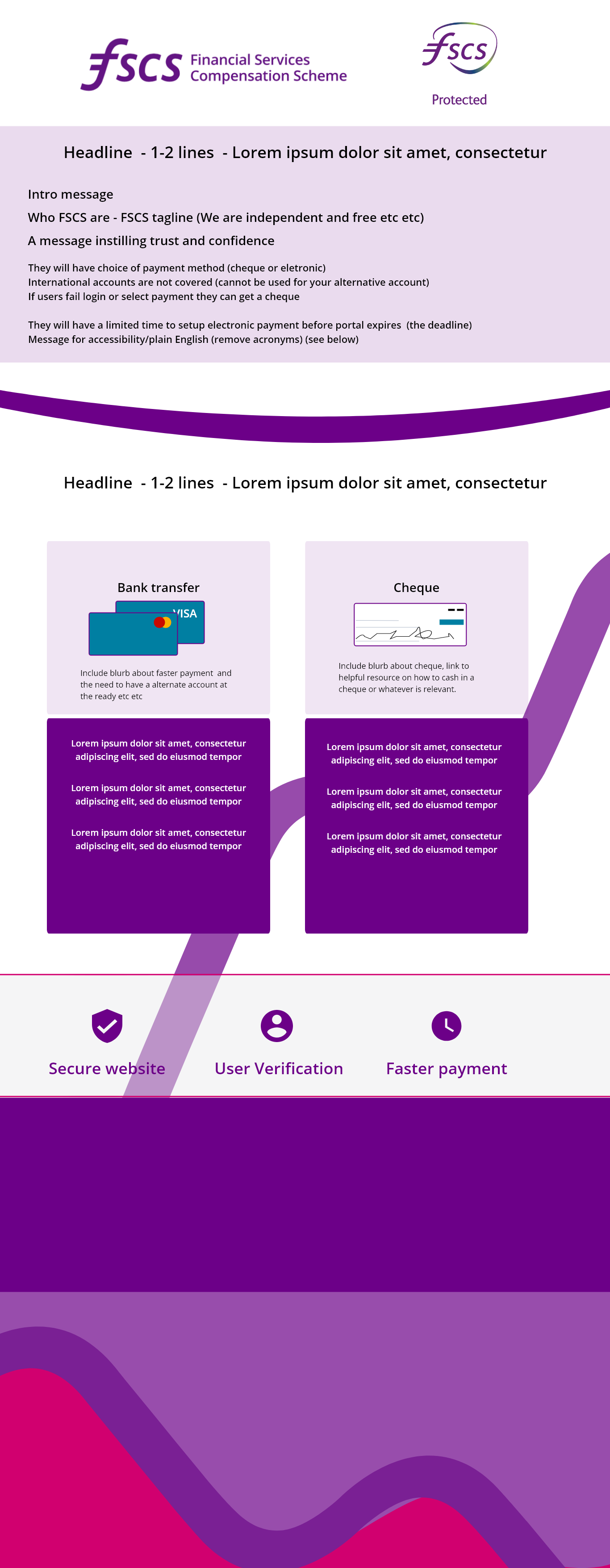
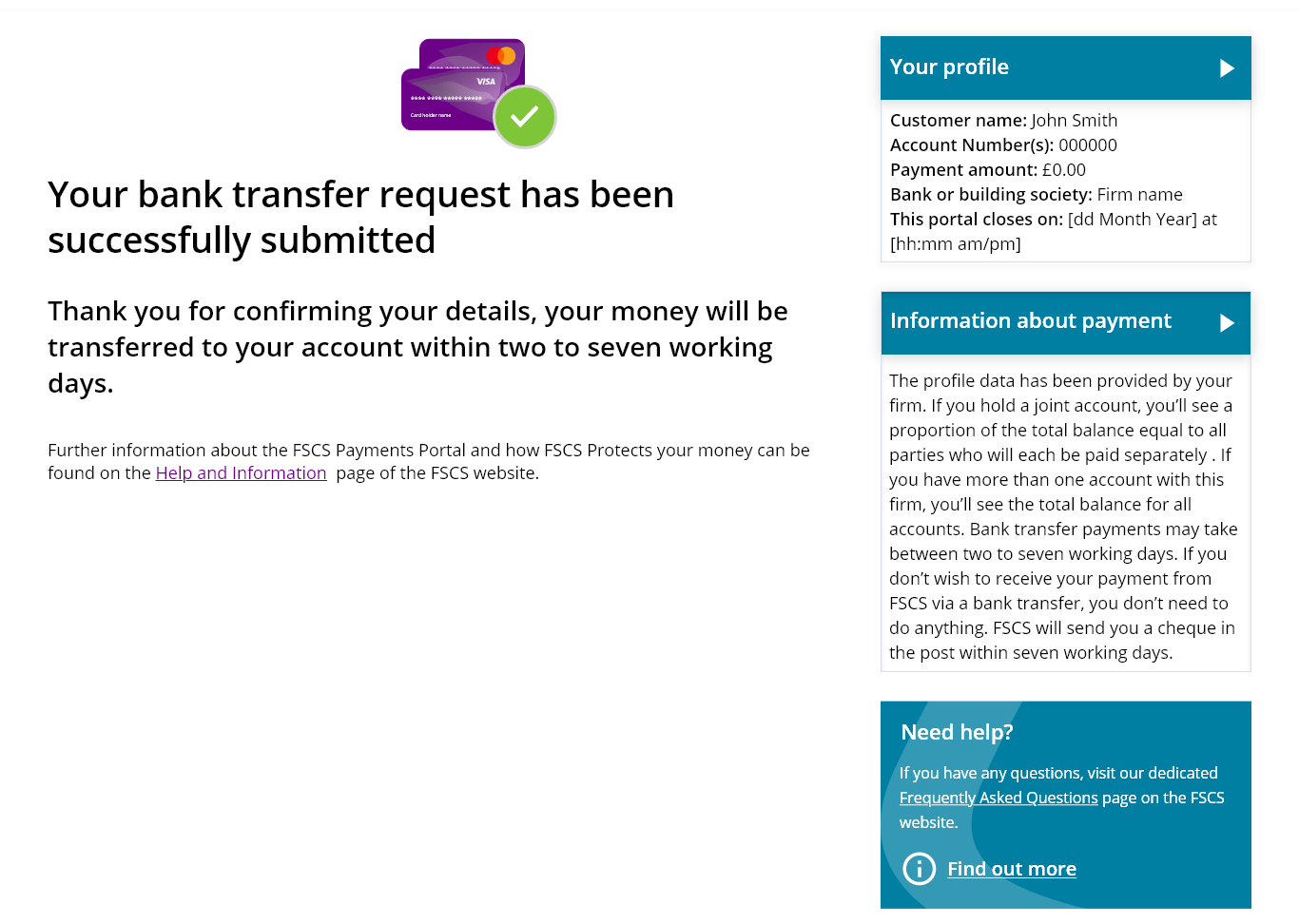
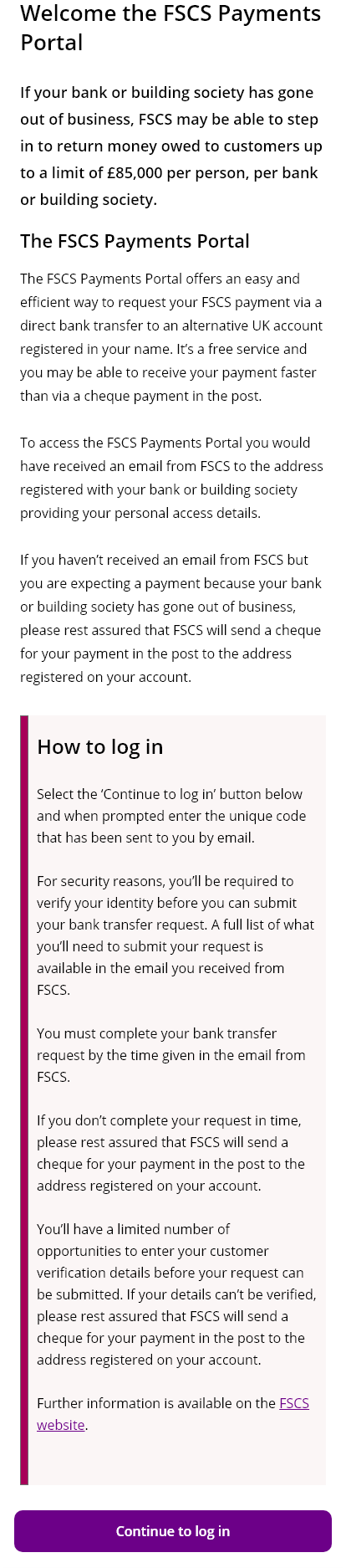
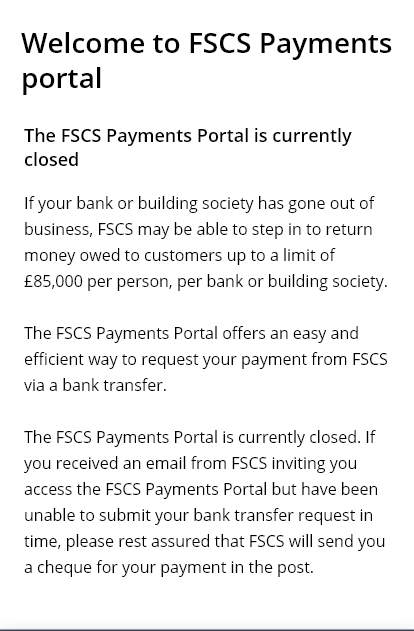
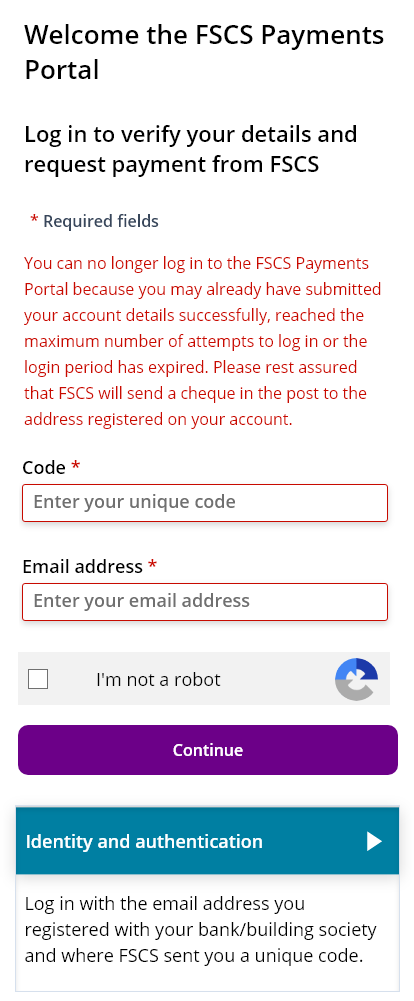
- Final UI designs with guided (“dummy”) content
- Email template design and supporting communication flows
- UX-led copywriting and content proofreading

Outcomes
- The portal was successfully deployed and operational within two months of launch
- It efficiently processed customer claims following deposit failures
- The solution has since become an integral part of FSCS’s response to deposit failures
Future considerations:
- Further development is required to support Credit Union failures, currently constrained by regulatory and policy limitations





 Jenni M G